Budget Game
Students navigate income, fixed expenses, and unexpected life events across a realistic multi-stage simulation that builds real decision-making habits.
Alpine Credit Union’s Financial Literacy Program brings hands-on financial education to K-12 classrooms: a real-world budget game, a stock market simulation, and ready-to-teach curriculum. Register to get your class started.
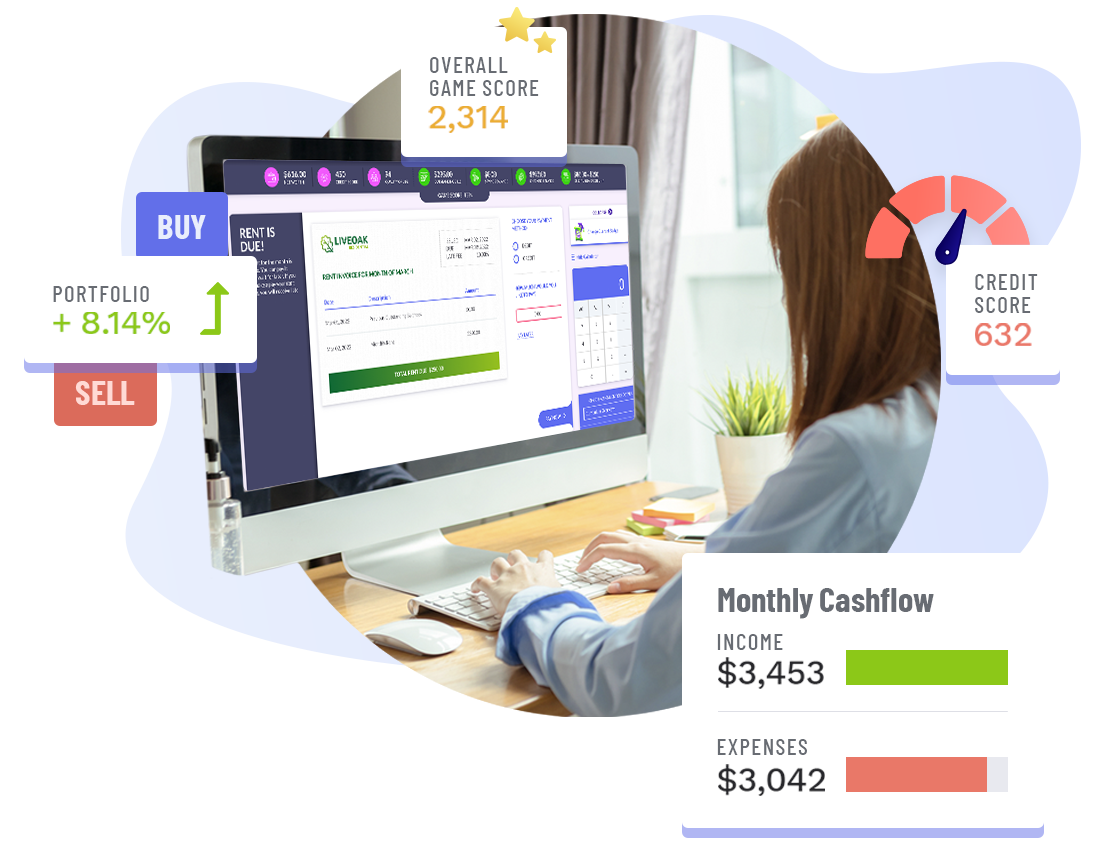
Four tools in one program, designed to give teachers a complete financial literacy classroom experience from day one.
Students navigate income, fixed expenses, and unexpected life events across a realistic multi-stage simulation that builds real decision-making habits.
Live market data powers a hands-on investing experience where students build portfolios, research companies, and learn how markets respond to real-world events.
Lesson guides, setup walkthroughs, and classroom tools organized in one place so teachers spend less time preparing and more time teaching.
Curriculum maps to Utah’s General Financial Literacy standards, so it is straightforward to show administrators how class time supports the graduation requirement. See the alignment.
A guided setup walks teachers from registration to their first active class session. No manual account creation, no waiting on IT.
Enter your name, school, and email. Your account is created and linked to your school on the back end.
Create your class section, pick the simulations you want to run, and configure the settings that match your schedule.
A short guided walkthrough covers the teacher dashboard, lesson library, and progress tracking so you know where everything lives before students arrive.
Share a registration link with your class. Students join, create accounts, and start the simulation. No usernames to distribute manually.
Students learn by doing, not by reading. Every choice they make has a consequence, and every consequence teaches something real.
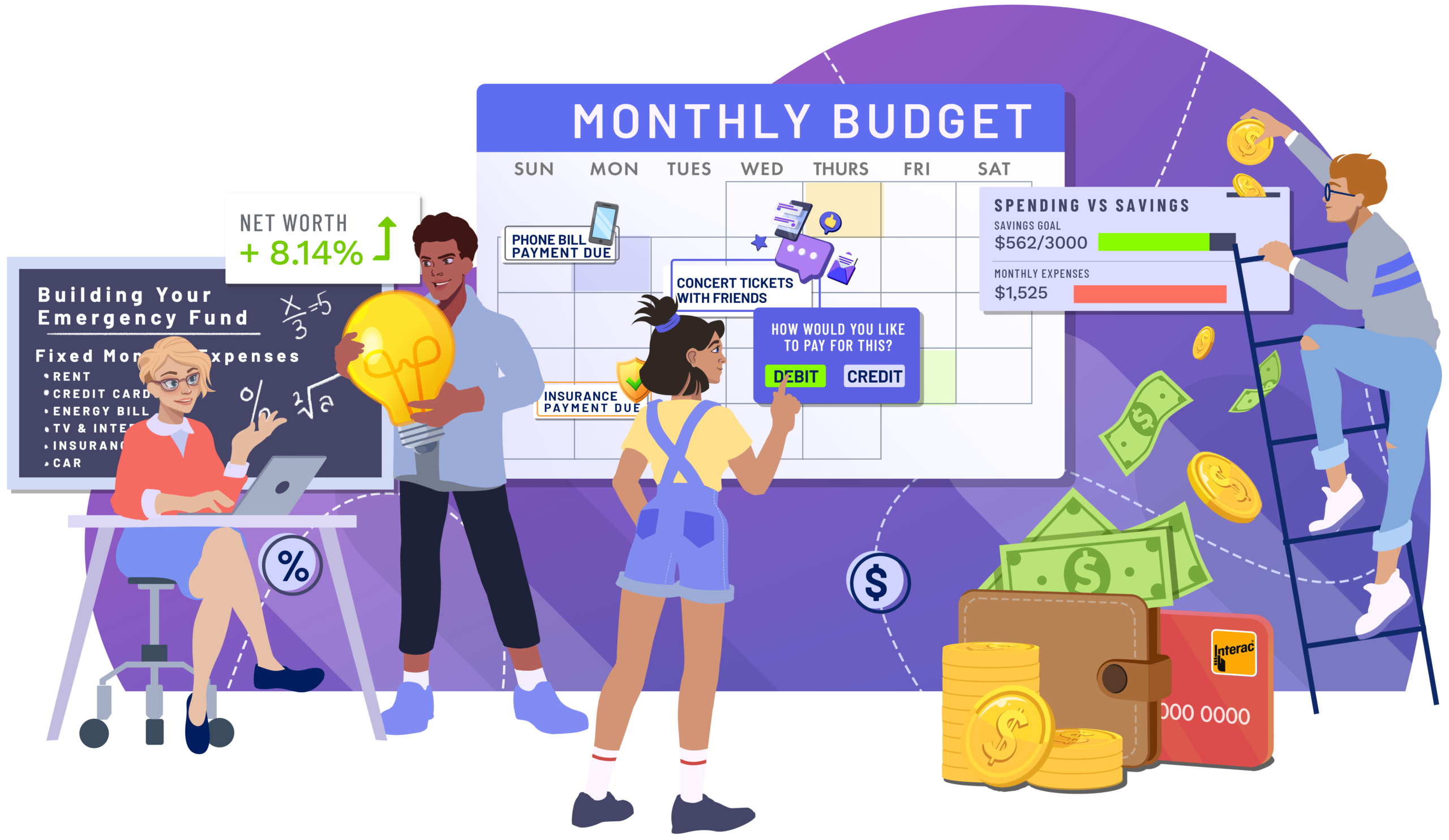
Students move through life stages by responding to financial events. Each round, they see their expected income, fixed costs, and emergency needs, then decide how to handle them.
At the start of each month, students build out a plan before the events hit, reinforcing a habit of thinking ahead rather than reacting.
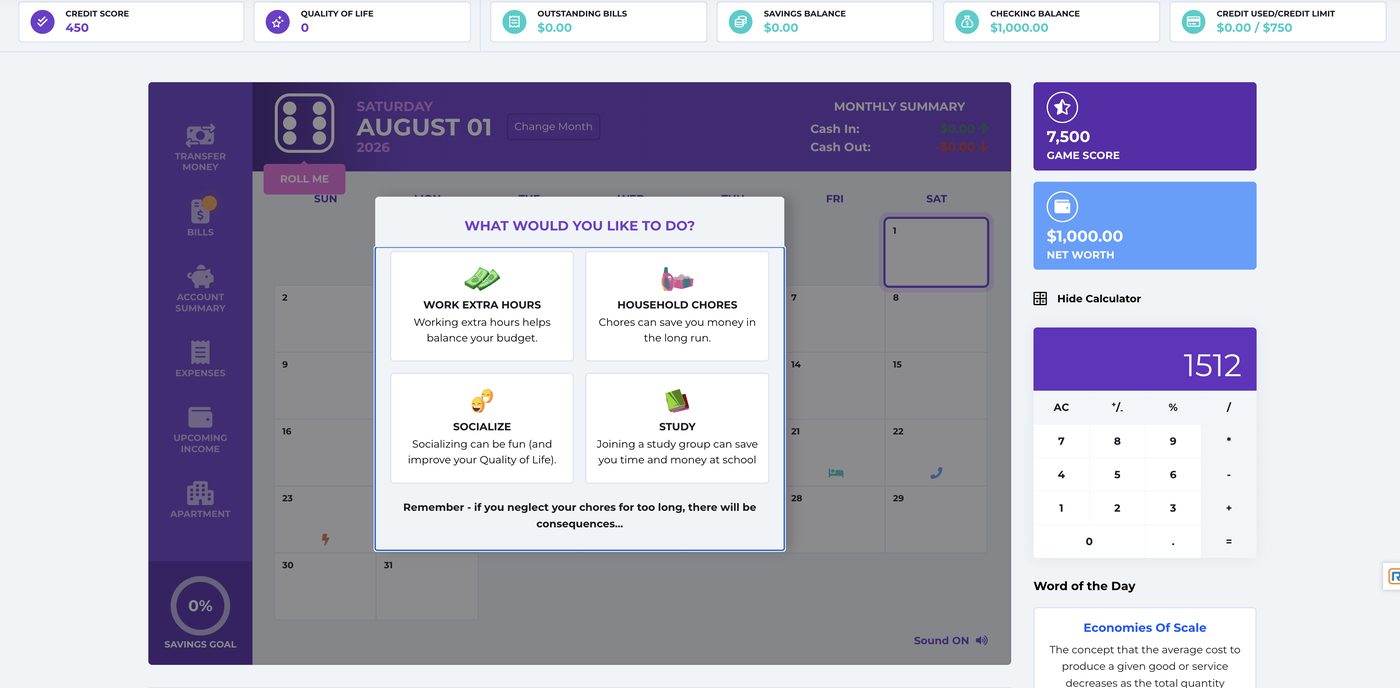
Each answer carries forward. Students see the long-term impact of short-term decisions in a way that sticks.

Teachers can review each student’s checking and savings activity, credit card usage, savings milestones, and lesson scores from one dashboard.
Every action students take on the platform is tracked, so teachers have a clear picture of who is engaged, who is struggling, and what to address next.
The program is not just a simulation. It pairs every scenario with curriculum that teachers can assign, grade, and track.
Lessons and simulations align with Utah’s General Financial Literacy standards. Teachers can document coverage without extra prep work.
80+ hours of content available. Teachers choose what fits their schedule. Not every unit needs to be used for the program to deliver real learning value.
The simulation tracks financial health across four dimensions so teachers get a practical view of where each student stands, not just a game score.
Students are measured on whether they hit short-term and long-term savings targets, not just whether they avoided going broke.
Paying bills on time, managing debt responsibly, and avoiding overextension all affect each student’s credit score inside the simulation.
Students balance financial health with wellbeing, learning that a good financial outcome is not just about maximizing a bank balance.
The long-term goal of the simulation is to grow net worth while making responsible tradeoffs. Students see how compounding decisions add up over time.
The Alpine Credit Union Financial Literacy Program is brought to you by Alpine Credit Union in partnership with PersonalFinanceLab. Register as a teacher to set up your class.
Teachers Register HereThe financial simulations and educational content provided through PersonalFinanceLab and Stock-Trak are designed for educational purposes only and do not constitute financial advice, investment recommendations, or a solicitation to buy or sell any securities. Past simulation performance is not indicative of actual market performance.
PersonalFinanceLab is committed to protecting student privacy. The platform complies with applicable federal student privacy laws including FERPA and, where applicable, COPPA. Student data is used solely for educational purposes and is never sold to third parties. Participating institutions retain control over student roster data. For full details, see our Privacy Policy.